Exfoliants in cosmetics – what do the regulations say?
11 February 2026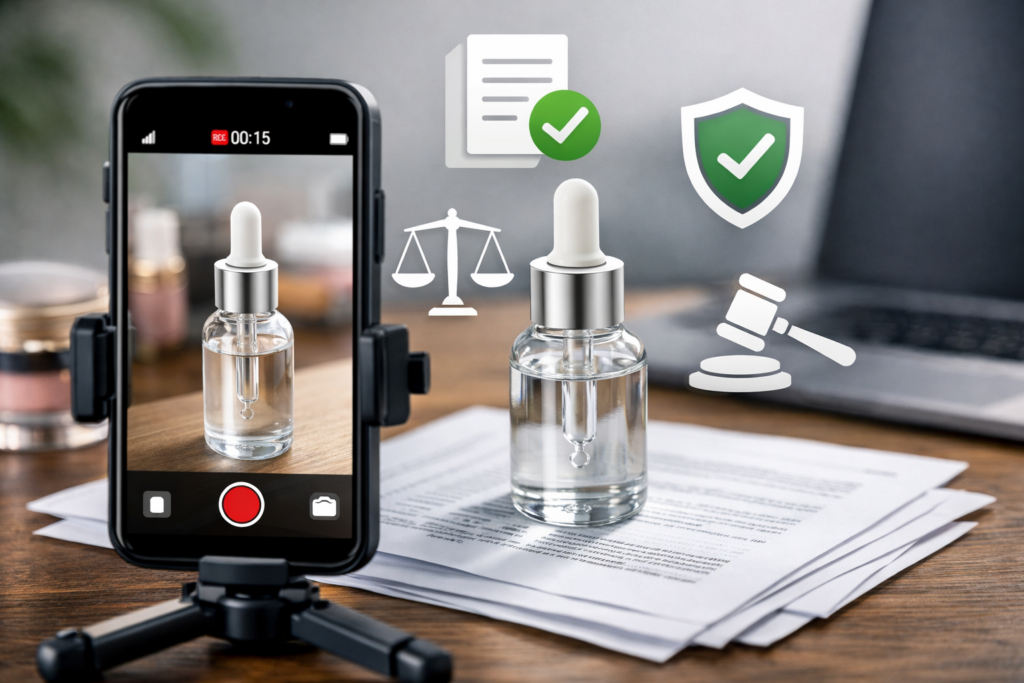
In recent years, the number of influencers promoting consumer products on social media has increased significantly.
The cosmetics sector is where influencer marketing generates the most sales. Enjoying rapid and consistent growth, this phenomenon is not without risk for consumers: misleading commercial practices, disguised advertisements, and influence over young audiences.
CLEAR reviews the legislative and regulatory framework governing this extremely fashionable practice.
In France
To combat potential abuses associated with influencer marketing, Law No. 2023-451 of 9 June 2023 regulates commercial influence through electronic means. Its two pillars are support for influencers and consumer protection.
What does this law say?
- It provides a clear definition of what constitutes commercial influence: An influencer is defined as any person who, “in return for payment, communicates to the public by electronic means, content aimed at promoting, directly or indirectly, goods, services, or any cause whatsoever”.
This clarification is essential for the cosmetics sector: it enables a distinction between a simple personal recommendation and a genuine commercial promotion, which is subject to legislation.
- The law also provides for a written agreement between the influencer and the brand for collaborations over €1,000 excl. VAT (payments and value of benefits in kind granted to the influencer by the advertiser over the same year, “in return for a service or a set of commercial influence services carried out by electronic means for the same promotional goal”).
This agreement contains mandatory information, including the identities of the parties, the nature of the assignments, the compensation (financial or in kind), and the parties’ respective rights and obligations.
To ensure greater transparency, influencers must clearly, visibly, and unambiguously indicate when content is advertising or the result of a commercial partnership (for example, by labelling it “Advertisement” or “Paid partnership”).
Content created must also indicate whether images or videos have been modified or retouched.
Activities involving unfair competition are prohibited, namely, denigration of the products or services of a competing brand or another influencer.
- The law also prohibits certain forms of promotion, in particular those relating to cosmetic surgery and aesthetic medicine.
Other applicable texts include :
The French Consumer Code and, more generally, regulations on unfair competition and intellectual property law.
The ARPP (Autorité de Régulation Professionnelle de la Publicité) published a recommendation on digital advertising that, in particular, addresses good practices between influencers and brands.
What is the liability of influencers regarding what they publish about cosmetic products?
Claims relating to cosmetic products are governed by Regulation (EC) No. 1223/2009, Regulation (EU) No. 655/2013, and the French Consumer Code.
Influencers’ statements must comply with the provisions of these texts and, in particular, must not:
- Exaggerate the effects of a cosmetic product.
- Present an effect as proven when it is not.
- Mislead consumers about the product’s properties, performance, or expected results.
Even if the message comes from the brand itself, influencers become liable when disseminating it. Influencers must not reword a marketing claim if doing so might alter its meaning. According to Law No. 2023-451 of 9 June 2023, influencers are liable for the promotional content they post and must verify the conformity of the products they promote. They may incur civil liability (harm to consumers) and criminal liability in the event of misleading practices.
For brands, this implies training influencers, regulating messages through contractual agreements, and integrating cosmetic regulations into the influencer strategy.
Influencers are therefore not merely a simple relay: they are stakeholders responsible for the conformity of the messages they disseminate.
What is the framework in Europe and Britain?
Within the European Union, influencer marketing is not governed by one single text but by several Directives and Regulations applicable to advertising, commercial practices, and digital services.
In the United Kingdom, influencer marketing is governed by a series of legislative texts and self-regulatory rules.
In both cases, the texts regulate all forms of online advertising and digital platforms, including influence, but they are not specific to influencers, unlike French law, which targets influence and clearly holds influencers and brands liable.
If you wish to set up partnerships or already have agreements with influencers, contact CLEAR for help in ensuring your material complies with the regulations!
Sources:
Upfluence https://www.upfluence.com/
Law No. 2023-451 of 9 June 2023 regulating commercial influence and combating abuses by influencers on social media: https://www.legifrance.gouv.fr/jorf/id/JORFTEXT000047663185
https://www.europe-consommateurs.eu/achats-internet/les-influenceurs.html
https://www.service-public.gouv.fr/particuliers/actualites/A18674
https://www.economie.gouv.fr/influenceur-createur-contenu-mesures-encadrement#